

According to The Information, a outgoing AI researcher in Meta, in a farewell e-mail, harshly criticized the internal culture of the tech giant as “transferal cancer”. The email author, Tijmen Blankevoort, is a core member of the Al-LaMA development team, known under Meta’s umbrella as AI Model.
Blankevoort, in his mail, paints a bleak picture of the company ‘ s AI sector, claiming that it is in deep anxiety and organizational chaos. “We are in a culture of fear”, he wrote in his e-mail, and attributed it to endless performance assessments and repeated layoffs, which, in his view, severely undermined staff motivation and stifled creativity.
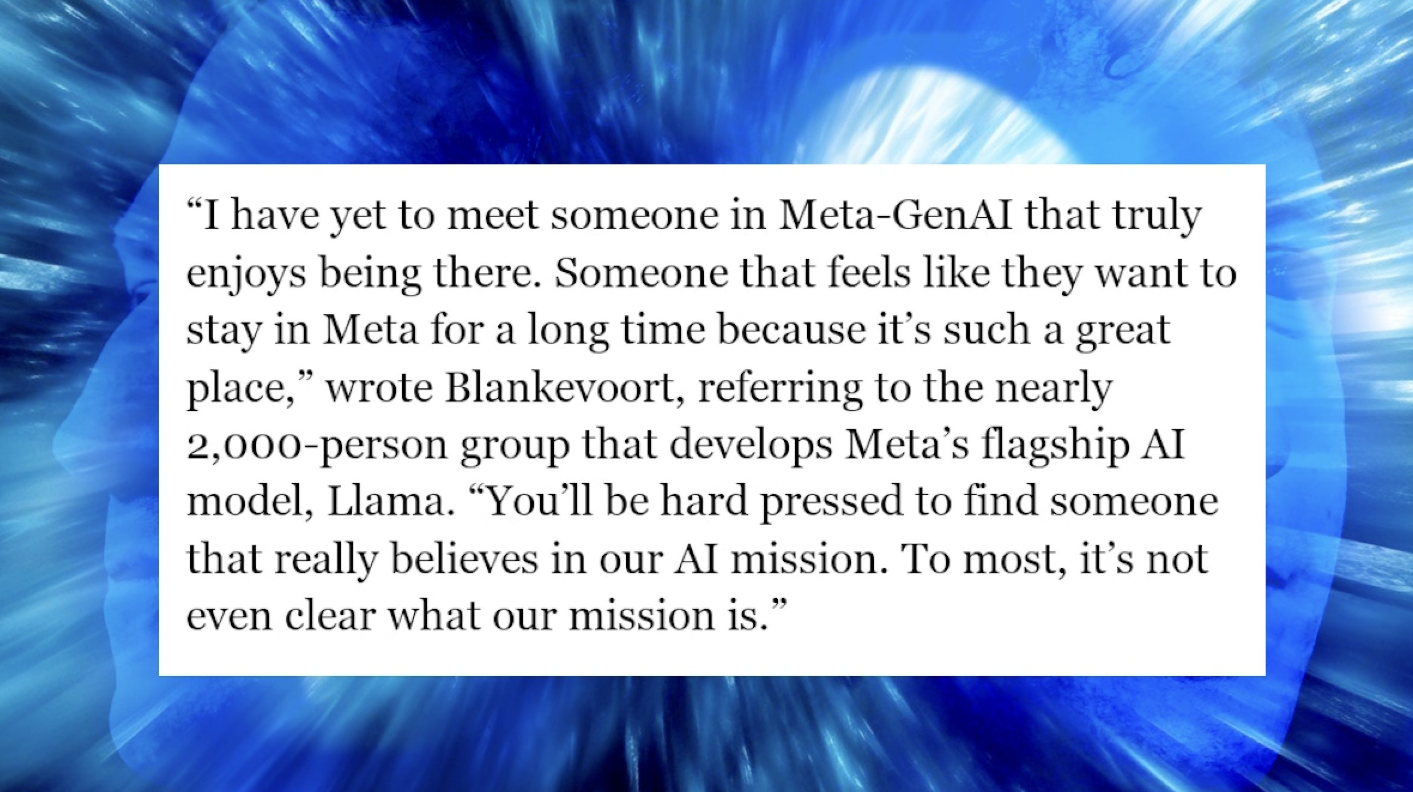
Although Meta ‘ s AI sector has rapidly expanded to more than 2,000 employees, Blankevoort claims that this growth has not been accompanied by a clear vision or a coherent strategy. He added that many staff members were dissatisfied with their roles and lacked information on the overall objectives of the team.
Tijmen Blankevoort’s most devastating allegations point to the deep-seated disease that affects the entire Meta: “It’s not just a dysfunction, it’s a transitive cancer that is affecting the entire organization”, he stressed.
It is precisely in the context of this harsh criticism that Meta is re-energizing its artificial intelligence ambitions. The company is working to develop generic artificial intelligence, with a view to competing with rivals such as OpenAI and Google DeepMind, through the creation of a new “super-smart laboratory”. As part of this strategy, Meta has significantly increased recruitment efforts to attract top-level researchers from the entire industry with a generous remuneration programme.
According to Bloomberg, the newest members include the former head of Apple’s basic model team, Pon Yong-hyeong, who will assist in leading the development of the AGI in Meta. Other recent AI scientists include experts from OpenAI, Anthropic and Google, such as Yuanzhi Li and Anton Bakhtin.

The aggressive recruitment strategy of Meta has raised concerns. OppenAI executives have expressed concern about the way in which their “drilling” talent is done and have accused Meta of offering too much contract bonuses to attract key employees. However, Meta defended her behaviour by stating that such high-paying schemes were not common and were usually available only to senior leaders.
Although Meta spared no effort in the competition for talent, the letter of separation from Blank Fort highlighted that internal morale and direction issues could remain major obstacles. According to The Information, his mail has generated discussion and reflection within the company.